
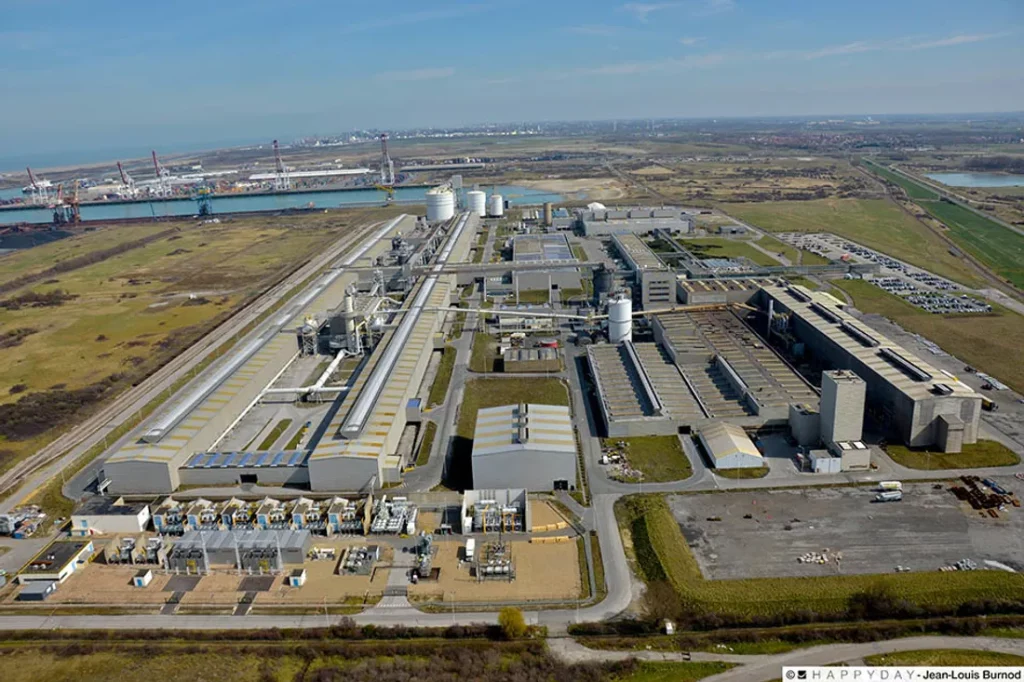
Predictive study and acoustic modeling for Aluminium Dunkerque
Controlling industrial noise is a strategic issue for production sites subject to regulatory compliance and social responsibility requirements. Aluminium Dunkerque, Europe’s leading producer of low-carbon aluminum, has taken a proactive approach to environmental monitoring (noise, vibration, air quality). As part of this initiative, the Loon-Plage site called on SIM Engineering, a recognized acoustics consultancy, to carry out a comprehensive predictive acoustics study.
- Introduction
- Industrial acoustic context and challenges
- Predictive acoustic study methodology
- Acoustic modeling and development scenarios
- Results and benefits for the industrial site
- Conclusion and call to action
Industrial acoustic context and challenges
The Oil & Gas industry, like the metallurgy sector, has to deal with complex and constantly changing noise environments. Site activities – carbon, electrolysis, smelting, maintenance – generate acoustic emissions requiring vibration and pulsation analysis, particularly to prevent mechanical fatigue of equipment.
The mission entrusted to SIM Engineering was fully in line with Aluminium Dunkerque’s policy of environmental performance and industrial process acoustics, aimed at preserving the quality of life of local residents and the acoustic comfort of employees.
Predictive acoustic study methodology
The approach developed is based on a rigorous method, in line with industrial acoustic engineering standards. The main steps taken by SIM Engineering are :
- Identification of main noise sources (noisy industrial machines, maintenance circuits, production units),
- Acoustic measurements and field diagnostics at various points in the production cycle,
- Collection of operating data and technical drawings,
- Integration of information into a global numerical model for acoustic predictive modeling.
This approach provides a comprehensive, dynamic view of the industrial noise environment, including in future configurations.
Acoustic modeling and development scenarios
The 3D acoustic simulation, carried out using advanced software tools, generated :
- Detailed noise maps of the site and surrounding area,
- Comparative analyses of different configurations (building additions, equipment modifications, development scenarios).
Thanks to this vibratory and acoustic study, SIM Engineering was able to test several soundproofing solutions in advance: positioning of acoustic screens, noise reduction at source, improved insulation of technical rooms and spatial reorganization of machines.
Results and benefits for the industrial site
The results of the study enabled Aluminium Dunkerque to :
- Prioritize noise sources according to their impact on the environment and users,
- Target priority corrective measures with a view to controlled reduction,
- Comply with ICPE regulations on industrial noise,
- Anticipate site development changes without acoustic risk.
This mission reinforces the site’s global strategy forindustrial building acoustics, industrial acoustic safety and long-term regulatory compliance.
This project, carried out for Aluminium Dunkerque, demonstrates SIM Engineering’s ability to support large industrial sites in complex projects involving acoustic diagnostics, vibration studies and environmental modeling. Thanks to its proven expertise in acoustic engineering, SIM Engineering contributes to an industry that is more efficient, safer and more respectful of its environment.
Do you want to anticipate noise pollution on your industrial site or secure a development project?
➡️ Contact one of our experts for a tailor-made acoustic and vibration consultancy service.
Our experts are at your service to help you reduce risks, optimize your installations and guarantee the compliance of your projects.